San Roque is particularly well known as a protector against the plague and many of the celebrations dedicated to him originated in vows
made during epidemics, especially in the 15th, 16th and 17th centuries.
In Calatayud (Saragossa) a huge crowd gathers to watch sunrise and hear mass on the feast day of San Roque, whilst the rich
aspects of folklore can be enjoyed on this date in the village of Llanes (Asturias), similar to the celebrations held on the
feast of Mary Magdalene. The brotherhoods of Señor Sant Roque in Llodio (Alava) celebrate the feast with a meal in the hermitage,
followed by a dance called the aurresku.
The feast of San Roque is the only day of the year in Amer (Girona) when the Batlle or Alcalde sardana is danced
(a typical Catalonian dance), and only on this day the circle of dancers remains open at all times for anybody who may wish to join in.
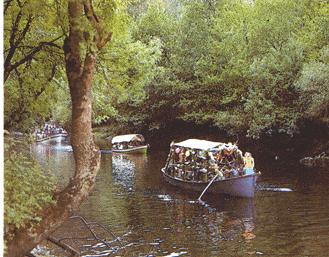
In Betanzos (La Coruña) women and sailors dance and the gira a los Caneiros takes place by crossing the river
Mendo in adorned boats lit by lanterns; in the baile de los pollos (dance of the chickens) in Bronchales (Teruel) only
people over 65 years of age may participate.
Among the exceptional celebrations which mark the feast of San Bartolomé on 24th August, mention must be made of the dance and
speeches in Borja (Saragossa), the dances of the half-woman, half-bull or half-man, half-bull (depending on who the performers of
the day are) in Montehermoso (Cáceres) and the traditional dances called Els Cossiers in Montuiri (Mallorca),
considered to be the oldest on the island.
On the feast of San Agustín (28th August) there are also dances to the traditional music of tabalet i a la dolçaina in
Bocairente (Valencia) and cavallets, figures with enormous heads (cabezudos) and devil figures in Felanitx (Mallorca).
On 30th August, the main festival of Villafranca del Penedés begins, which is considered to be the most typical in all Catalonia.
The best song and dance groups perform in the town square, just as they do the rest of the year round in other places in Catalonia,
especially in the provinces of Barcelona and Tarragona; there are also figures of devils, enormous heads, giants, the dragon,
the eagle and dances accompanied by the typical music of grallers i dolçainers. Adding to this list the sardana and l'envelat
(both regional dances), we get some idea of the scale of the main Catalonian festivals.
Every six years Morella celebrates its Sexanales in honour of the Virgen de Vallivana --the last were in 1988-- and these date back to 1672.
The grand procession includes all kinds of figures and dances and takes place along streets adorned with brightly-coloured paper showing different
motifs.
On the 6th of September, the cascamorras or cascaborras (representative of the village in traditional costume) leaves Guadix,
bound for Baza (Granada) with the intention of staying perfectly clean throughout the journey in order to thus gain possession of the Virgen de
la Piedad. Of course, the villagers of Baza are strongly opposed to any such idea, and so by the end of the journey the cascaborras and even
many of the people who go with him, arrive in quite a state.
On the first Sunday of the month, the triennial festival in honour of the Virgen del Pino is held in El Paso (island of La Palma). The last one
was in 1988 --on this date the figure of the Virgin is repositioned after being brought out on the last Sunday in August. Also, in Mota del Cuervo
(Cuenca) the Virgen de Manjavacas is taken on a journey, although here this is done by so-called anderos, villagers who do not stop running between
the shrine and the village, which is a distance of 7km. On the third Sunday she is returned in the same fashion.
Apart from days of a general festive nature, such as Christmas or Easter, the 8th of September is the most festive of the year. Innumerable towns and villages
celebrate their patron saints on this day which makes it impossible to even list all of them. We must however make passing reference to some of the most interesting
traditions: the dancers of the Virgen de la Casita in Alaejos (Valladolid); the pilgrimages of the Queen of Angels in Alájar (Huelva) and of the Virgen de Cortes in
Alcaraz (Albacete); the fascinating festival of the Mother of God and Health in Algemesí (Valencia) with the muixeranga, considered
to be the predecessor of the Catalonian castellers; the parade in Hondarribía (Guipúzcoa); the traditional dances in Miranda del Castañar
(Salamanca), Ochagavía (Navarre), Peñíscola (Castellón) and Saldaña (Palencia); and the pine pilgrimage in
Teror (Gran Canaria). At dawn on the 8th of September, the devil bursts into the festival of Tijarafe (La Palma) among explosions of powder. A young man,
duly protected and covered with a harness where the fireworks have been placed, dances while bengal lights and rockets explode.
The Holy Cross is also worshipped on the 14th of September with celebrations dedicated to the Christ of Calatorao in the province of Saragossa which has an enormous
following: giants, giant heads, musical groups, cavaliers, masked figures, rogues and dancing youths appear in Graus (Huesca) and dawn serenades and jesters
complete the scene. Calzada de Calatrava (Ciudad Real) boasts processions of almost 3km in length in honour of Christ, the Saviour of the World on this same Sunday.
For the celebration of La Merced (24th September) giants from all over Catalonia flock to Barcelona and parade through the streets and squares of the city. On the
27th in Mieres (Asturias) the pilgrimage in honour of the Holy Martyrs of Valdecina is held, considered to be the oldest in the region. On the feast of San Miguel (29th September)
the traditional paloteado is performed in Cortes (Navarre).
 Spanish Fiestas


 Back to Spanish Fiestas